Wood, Vinyl, or Aluminum? How Deltona Homeowners Should Choose a New Fence Material
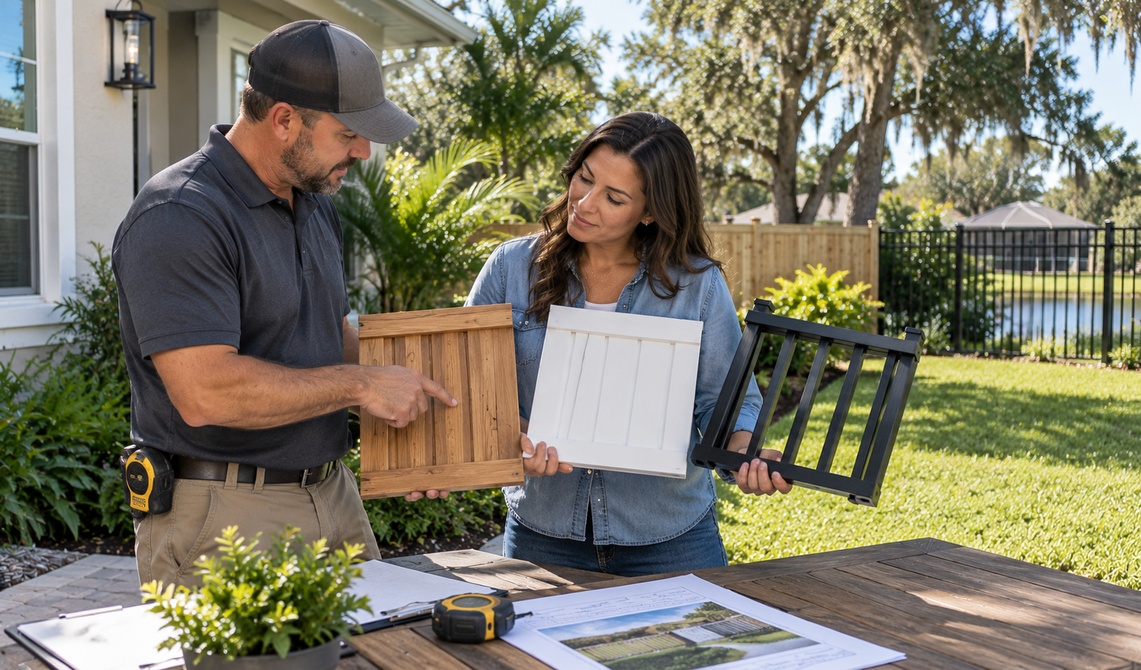
The right fence material depends on your yard, your budget, your maintenance tolerance, and how long you plan to stay in the home. There is no universal answer, but there is a right answer for your situation. Byers Fence offers consultations that walk through all three options without pushing any particular product. Call (386) 457-2045 or schedule a free estimate and we will price out the options that actually fit your needs.
Deltona homeowners shopping for a new fence typically start with a material preference based on what they have seen in the neighborhood or what they imagine looks right with the house. That instinct is a reasonable starting point, but material choice involves tradeoffs that are not always obvious until someone lays them out clearly. Upfront cost, long-term upkeep, Florida's climate, HOA requirements, and how the fence will actually be used all belong in the conversation before a final decision is made.
How Does Upfront Cost Compare to Long-Term Upkeep for Each Material?
Wood is typically the lowest upfront cost of the three materials, which makes it an appealing starting point for budget-conscious homeowners. Pressure-treated pine is the most common choice in Central Florida, and it installs for less per linear foot than vinyl or aluminum in most cases. The tradeoff is maintenance. A wood fence in Deltona needs to be cleaned, treated, and inspected regularly to hold up against moisture, insects, and sun damage. Without consistent upkeep, the wood grays, warps, and begins to deteriorate faster than it should. A wood fence that is well maintained can last fifteen years or more. One that is not maintained may need significant repair or replacement in eight to ten.
Vinyl costs more to install than wood but requires almost none of that ongoing maintenance. There is no painting, no staining, no annual treatment. Cleaning with a hose handles most of what Florida's environment throws at it. The higher upfront investment spreads across a lifespan that regularly reaches twenty to thirty years with minimal intervention, which means the true cost over time often runs lower than wood despite the higher entry price. For homeowners who are not interested in seasonal fence maintenance, vinyl's cost structure makes more sense than the initial quote suggests.
Aluminum sits at a different price point depending on the style and grade, and its cost justification is less about longevity than about application. Aluminum does not provide privacy the way a solid panel fence does, so it is rarely the right choice for a full backyard enclosure. For decorative boundaries, pool barriers, and front yard applications where visibility is acceptable or preferred, aluminum holds up extremely well in Florida's climate with almost no upkeep required and a lifespan that matches or exceeds vinyl.
How Do Florida Heat, Humidity, and Sun Affect Each Material's Longevity?
Florida's climate is genuinely hard on fences, and Deltona's location in Volusia County means dealing with heavy summer rainfall, sustained humidity, UV exposure for most of the year, and occasional severe weather. Each material responds to those conditions differently, and understanding those differences is part of choosing a fence that lasts.
Wood absorbs moisture, and in a climate where that moisture cycle repeats constantly through the wet season, the expansion and contraction accelerates cracking, splitting, and rot at the base of posts and along the bottom rails. The soil contact points are particularly vulnerable, because even pressure-treated wood will degrade faster when it is sitting in consistently wet ground. Proper installation with concrete-set posts and adequate drainage around the base extends wood's life considerably, but it does not eliminate the maintenance obligation.
Vinyl handles Florida's climate well. It does not absorb moisture, does not rot, and resists insects. The main climate consideration for vinyl in Central Florida is UV degradation, which causes lower-quality vinyl to fade, yellow, or become brittle over time. Specifying a higher-grade vinyl product with UV inhibitors built into the material addresses this directly. A quality vinyl fence installed in Deltona should hold its color and structural integrity for decades without meaningful weather-related decline.
Aluminum is largely indifferent to Florida's climate. It does not rust, does not absorb moisture, and handles UV exposure without degrading. The only real weather concern for aluminum is wind load during severe storms, which is a function of the panel style and post installation rather than the material itself. A properly installed aluminum fence holds up well through Florida storm seasons.
How Do Privacy and Pet Considerations Factor Into the Choice?
If full privacy is the primary goal, wood and vinyl are both viable and aluminum is not. A solid board-on-board wood fence or a closed-panel vinyl privacy fence blocks sightlines completely, which matters for homeowners who want to use the backyard without visibility from neighbors or the street. The choice between wood and vinyl for a privacy application comes back to the maintenance tradeoff described above rather than any functional difference in what the fence delivers.
Pet containment adds another layer to the decision. Dogs that dig require attention to how close the fence bottom sits to the ground, regardless of material. Dogs that jump require adequate height, which is typically six feet for most breeds with a serious jumping habit. Vinyl and aluminum both hold up better to pets scratching or leaning against the fence over time, because wood can be damaged by persistent contact in ways the other materials resist. A household with large, active dogs will typically find vinyl's durability and ease of cleaning more practical than wood over the life of the fence.
A busy family with three young children came to us interested in cedar or redwood because they loved how it looked with their home's exterior. During the consultation, we walked through what that material choice would actually require: annual cleaning, periodic staining or sealing, and watchfulness for the moisture and insect issues that affect wood in this climate. With three small children and schedules that did not leave much room for seasonal fence maintenance, the reality of wood upkeep was not going to fit their lives. We helped them find a high-quality vinyl option that complemented the look of the house without the maintenance burden, and it was the right call for where they actually were rather than where wood's aesthetic appeal had initially pointed them.
How Do HOA Rules and Home Style Affect the Decision?
Many Deltona neighborhoods have HOA guidelines that specify permitted fence materials, colors, heights, and styles. Before settling on a material, confirm what the governing documents allow. Some associations permit only certain colors of vinyl or prohibit wood privacy fences entirely. Others require aluminum for front yard applications and allow more flexibility in the backyard. Getting this information before the consultation avoids the situation where a homeowner falls in love with an option that turns out not to be permitted for their lot.
Home style is a real factor even when the HOA does not mandate a particular direction. A traditional brick or stucco home with established landscaping often looks best with a material that complements rather than contrasts with that character. A more contemporary home may suit aluminum's clean lines in a way that a board-on-board wood fence would not. These are aesthetic judgments that do not have a single right answer, but discussing the home's exterior with the contractor during the consultation often surfaces options the homeowner had not considered.
If you are weighing fence materials in Deltona and want a clear side-by-side comparison for your specific yard and budget, call Byers Fence at (386) 457-2045 or request a free estimate online. We price out each option and explain the tradeoffs so you can make a confident decision before the fence installation begins.