How Much Fence Do You Really Need? A New Smyrna Beach Homeowner's Budgeting Walkthrough
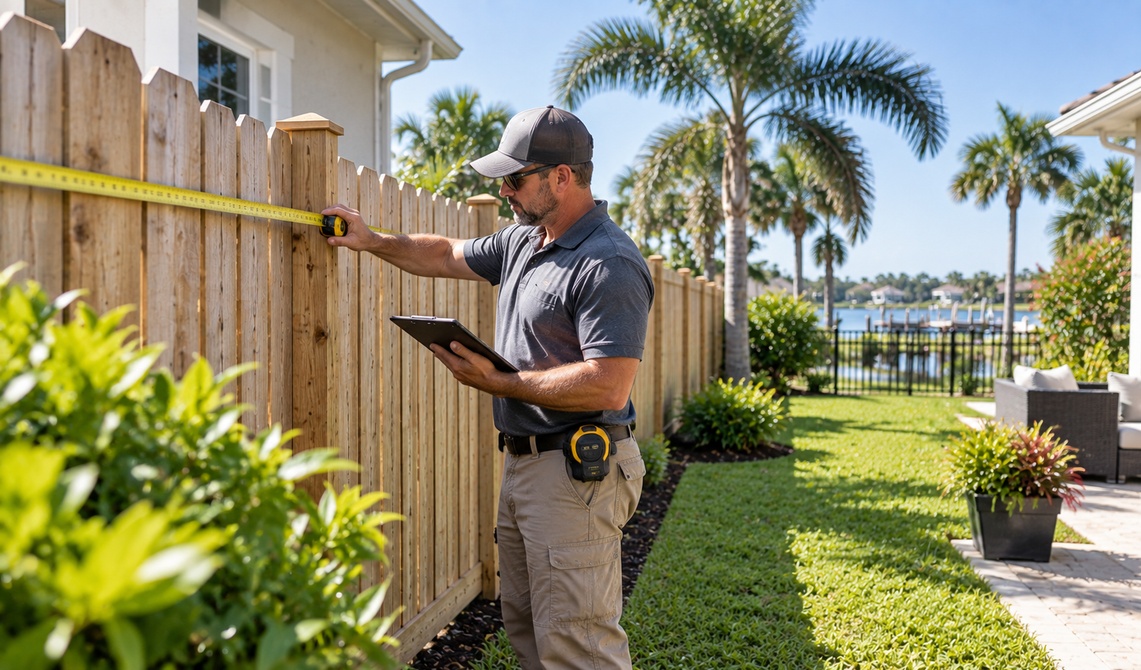
Figuring out how much fence you actually need is the question that makes everything else in the budget clearer. You do not need to have the answer before you call. Byers Fence walks the property with you, maps the options, and gives you a measured quote built around your real goals. Call (386) 457-2045 or schedule a free on-site visit and we will figure out the scope together.
New Smyrna Beach homeowners come to the fence conversation from a lot of different starting points. Some have a clear picture of what they want but no idea what it will cost. Others know roughly what they can spend but are not sure how far that budget will stretch or which part of the yard to prioritize. And some have an unusually shaped lot, a corner property, or a backyard that butts up against a neighbor's existing fence and are genuinely unsure where to begin. In every case, the right first question is not "what does a fence cost?" It is "what do I actually need this fence to do?" The answer to that question determines everything else.
Should You Fence the Full Perimeter or Just Part of the Yard?
A full perimeter fence encloses the entire property, which gives you maximum privacy, the clearest boundary definition, and the most complete containment for children or pets. It is also the highest linear footage option and therefore the highest cost. For homeowners who want all of those things and have the budget, a full perimeter installation is the right scope. For homeowners who are working with a tighter number or whose primary goal is more specific than total enclosure, a partial fence is often a smarter approach.
A backyard-only fence is the most common partial configuration. It runs across the back of the property and connects to the rear corners of the house, enclosing the backyard without touching the front yard or the street-facing side. This scope typically covers significantly less linear footage than a full perimeter and costs proportionally less, while still achieving most of what people want from a residential fence: a usable, private outdoor space with a clear boundary. Many New Smyrna Beach neighborhoods also have HOA or aesthetic preferences that make a front yard fence less practical, which makes the backyard-only scope a natural fit.
A pet area or side-yard enclosure is the most targeted option and the lowest footage of all. A dedicated run along one side of the house, or a smaller enclosed area within the backyard, contains a dog or creates a specific-use zone without requiring a full installation. For homeowners who want to keep costs as low as possible right now and are not primarily concerned with privacy or full enclosure, this is a viable starting point that can be expanded later.
How Do Gate Count and Height Affect the Total Cost?
Gates are a meaningful cost component that a lot of homeowners underestimate when they first start thinking about budget. A single walk gate for pedestrian access is a modest addition to the total. A double drive gate wide enough to move a vehicle, a lawn tractor, or a boat trailer through is a different calculation. Double gates require wider posts set deeper with more concrete, heavier-duty hardware rated for the additional swing weight, and more material than a walk gate. If you need drive access, that gate needs to be built right, and the price reflects that.
Gate count matters beyond just the drive access question. Every gate is an opening in the fence line that requires its own posts, hardware, and latch, and those add up if you are planning multiple entry points. A backyard fence with a walk gate on each side of the house plus a drive gate at the back involves three separate gate installations. Being clear about how many gates you actually need, and where, lets the contractor give you an accurate number rather than a base price that grows when the details come out later.
Height is the other variable that moves the total. A four-foot picket fence uses less material than a six-foot privacy fence, and the post requirements change with height as well. Taller fences need deeper posts with more concrete to maintain stability, which adds both material and labor cost. Most residential privacy applications in New Smyrna Beach run six feet, which is also the standard height for pool barrier compliance under Florida building code. If your fence needs to meet pool code, confirm that requirement with the contractor at the outset so the height and gap specifications are built into the installation plan.
Can You Phase the Project If the Budget Is Tight Right Now?
Phasing a fence project over time is a practical option that more homeowners should consider when the full scope exceeds what the budget comfortably supports right now. The approach works best when the property has a natural break point that lets phase one stand on its own as a complete installation rather than an incomplete one. A backyard fence that runs from corner of house to corner of house is a finished product. Half a perimeter that leaves an open gap at the rear property line is not.
A workable phasing plan identifies which section delivers the most value for the budget available right now and installs that section completely, including gates and all finishing details. The second phase, whether that is adding the side yards, extending to a full perimeter, or enclosing a front yard area, comes later when the budget allows. The key is confirming with the contractor that the first-phase posts and connection points are sized and placed to accept the second phase without requiring existing work to be redone. A contractor who understands phased installations will build the first phase with the second in mind rather than treating each as a separate independent project.
Material choice also affects how well phasing works over time. A material that will look consistent when new panels are added alongside older ones phases better than one that weathers or fades noticeably in the first year or two. Vinyl holds its color and appearance well over time, which makes it a forgiving choice for a phased approach. Wood that has been exposed to Florida sun and rain for two seasons may not match new boards added in phase two without some refinishing work.
Why Does an On-Site Measure Produce a More Accurate Number Than an Online Estimate?
A homeowner in New Smyrna Beach came to us with an unusually shaped backyard and no clear sense of how much of it to fence or how to approach the layout. We walked the property together, talked through what she wanted the space to do, identified where the natural fence lines fell given the lot shape, and worked through a few different scope options with rough cost ranges for each. By the end of that walk, she had a plan that made sense for her goals and a price that fit her budget. That conversation could not have happened over the phone or through an online calculator, because the lot shape and the practical layout questions only became clear once we were standing in the yard looking at them.
An online estimate tool or a phone quote works by applying a standard cost per linear foot to a footage number the homeowner provides. That approach produces a number, but it does not account for grade changes that add labor, existing structures the fence needs to connect to, tree roots near the fence line that affect post placement, or the practical question of where gates need to go relative to how the yard is actually used. Any of those factors can move the real number meaningfully above or below the estimate, which is not useful information when you are trying to set a realistic budget.
An on-site measure takes those variables out of the equation. The contractor sees the yard, walks the intended fence line, identifies anything that affects the installation, and produces a quote that reflects the actual project rather than a hypothetical one. For a homeowner trying to make a confident decision about scope and budget, that accuracy is worth the visit.
If you are trying to figure out how much fence makes sense for your New Smyrna Beach property, call Byers Fence at (386) 457-2045 or request a free on-site measure online. We will walk the yard with you, talk through the options, and give you a clear number for the fence installation that actually fits your goals.