Getting Fence Quotes in Daytona Beach: How to Compare Contractors Without Overpaying
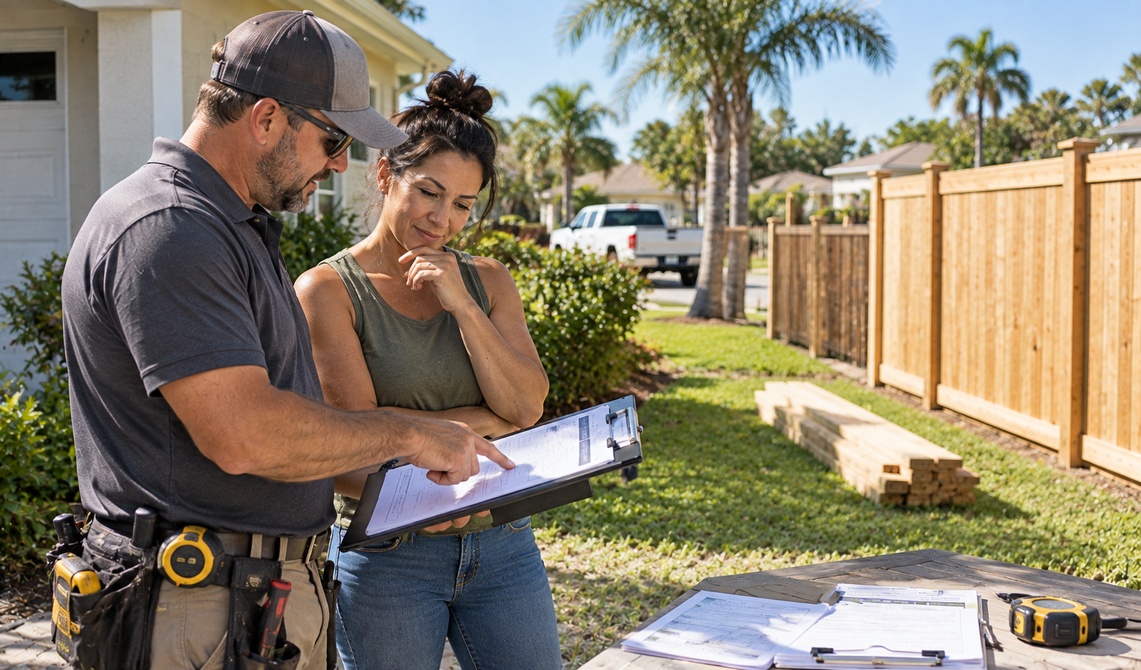
Collecting multiple fence quotes is the right move. Knowing how to read them is what makes the process actually useful. Byers Fence welcomes being compared and will give you a fully itemized estimate you can stack against anyone else's. Call (386) 457-2045 or request your estimate online and add us to your list.
Daytona Beach homeowners shopping for fence contractors typically receive quotes that vary enough to be confusing. One contractor comes in significantly below the others. Another is at the top with no obvious explanation. Without knowing what each quote actually includes, price alone tells you almost nothing useful. A low quote may be a great value or a setup for a project that delivers less than you expected. A high quote may reflect quality, or it may reflect a contractor who simply charges more. The only way to know which is which is to compare the quotes on equal terms, line by line.
How Do You Make Sure Every Bid Covers the Same Scope and Materials?
The most common reason fence quotes vary dramatically is that they are not quoting the same job. One contractor measured your full property including both side yards. Another quoted only the back line because that is what they assumed you meant. One included gate hardware in the price. Another listed a gate opening and left the hardware as an add-on. One specified a particular grade of vinyl panel. Another wrote only "vinyl fence" without any material specification at all. Those differences add up to quotes that cannot be compared fairly without first making sure they are describing identical work.
Before you request any quotes, write down the exact scope in your own words: the fence line you want enclosed, the number and type of gates, the height, and the material you are considering. Send that same description to every contractor and ask them to quote it explicitly. When the estimates come back, read each one against your description and confirm that every element is accounted for. If a quote is missing a gate you specified, ask whether it was excluded intentionally or overlooked. If a quote does not name the material grade, ask the contractor to add that detail in writing before you treat the number as final.
Post depth and concrete specifications are two details that frequently disappear from vague quotes. In Volusia County's sandy coastal soil, post depth and concrete backfill are not interchangeable choices. A contractor who does not specify these in the estimate may be planning to install posts shallower than the job requires, which is a shortcut that does not show until the fence starts leaning. Ask every contractor what depth they set posts to and how they secure them, and ask them to put that answer in the written estimate.
What Does a Vague Estimate Leave Out?
A vague estimate is one that gives a total price without specifying what that price covers. It might say "six-foot privacy fence, approximately 180 linear feet" with a dollar amount at the bottom and nothing else. That document does not tell you what material grade is being used, whether removal of the existing fence is included, how gates are priced, what the post installation method is, whether permit fees are in the number or will be billed separately, or what happens if the project scope changes once the crew is on site.
A first-time homeowner came to us after receiving several fence-repair quotes with significant price differences and no way to understand why. The estimates they had collected were vague enough that they could not tell whether the contractors were even quoting the same work. We put together a fully itemized estimate that spelled out the scope, the materials by grade, the post installation method, what was and was not included, and the payment structure. That level of detail gave the homeowner a real basis for comparison rather than a guessing game. They knew exactly what they were buying before they signed anything, and they felt confident in the decision rather than anxious about it.
A detailed written estimate protects you in both directions. It protects you from paying for work that was never clearly promised, and it protects against a contractor who might later claim that certain items were not included in the original price. Anything a contractor tells you verbally during the estimate visit that does not appear in the written document does not exist as a contractual commitment. Get the specifics in writing every time.
How Do You Check Licensing, Insurance, and Warranty Before You Commit?
Florida requires fence contractors to hold a current license, and verifying that license takes about two minutes through the Florida Department of Business and Professional Regulation's online lookup tool. A contractor operating without a current license creates liability exposure for the homeowner if something goes wrong during the project, because an unlicensed contractor cannot pull permits properly and any work they perform may not pass inspection. If a contractor cannot provide a license number when asked, that is the answer.
General liability insurance and workers compensation coverage are equally important. If a crew member is injured on your property and the contractor does not carry workers compensation, the claim can come back to the homeowner's property insurance. Ask every contractor for a certificate of insurance and verify that the coverage is current. A legitimate contractor will provide this without hesitation. One who pushes back or offers vague assurances about being covered is not giving you the documentation you need.
Warranty language varies widely across fence contractors and is worth reading carefully before you sign. A warranty that covers workmanship defects for one year is meaningfully different from one that covers nothing beyond the day of installation. Ask what the warranty covers specifically, how long it runs, and what process you follow to make a claim. A contractor confident in their work will stand behind it with terms that are clear and easy to understand.
What Deposit and Payment Terms Should You Expect?
A reasonable deposit for a fence installation in Daytona Beach typically falls in the range of thirty to fifty percent of the total project cost, collected before materials are ordered and work begins. A contractor asking for full payment upfront before any work is done is asking you to absorb all the risk in the transaction. That is not a standard arrangement, and it is a meaningful red flag regardless of how the request is explained.
Payment milestones tied to project progress are a reasonable structure for larger jobs. A deposit at signing, a second payment when materials arrive or installation begins, and the final balance on completion is a common and fair arrangement that aligns the contractor's incentive to finish the work with the homeowner's incentive to receive it. Get the payment schedule in writing in the contract and confirm that the final payment is not due until you have inspected the work and confirmed it matches the agreed scope.
Be cautious about contractors who apply significant pressure to sign quickly or who offer a steep discount that expires in twenty-four hours. A legitimate contractor with a full schedule does not need to create artificial urgency. The pressure tactic is designed to prevent you from collecting additional quotes and thinking the decision through, which is exactly what you should be doing on a project of this size.
If you are comparing fence contractors in Daytona Beach and want a fully itemized estimate you can actually use for comparison, call Byers Fence at (386) 457-2045 or request an estimate online. Our fence installation quotes spell out every line so you know exactly what you are comparing before you decide.