Budgeting for a New Backyard Fence in Debary: What Actually Drives the Price
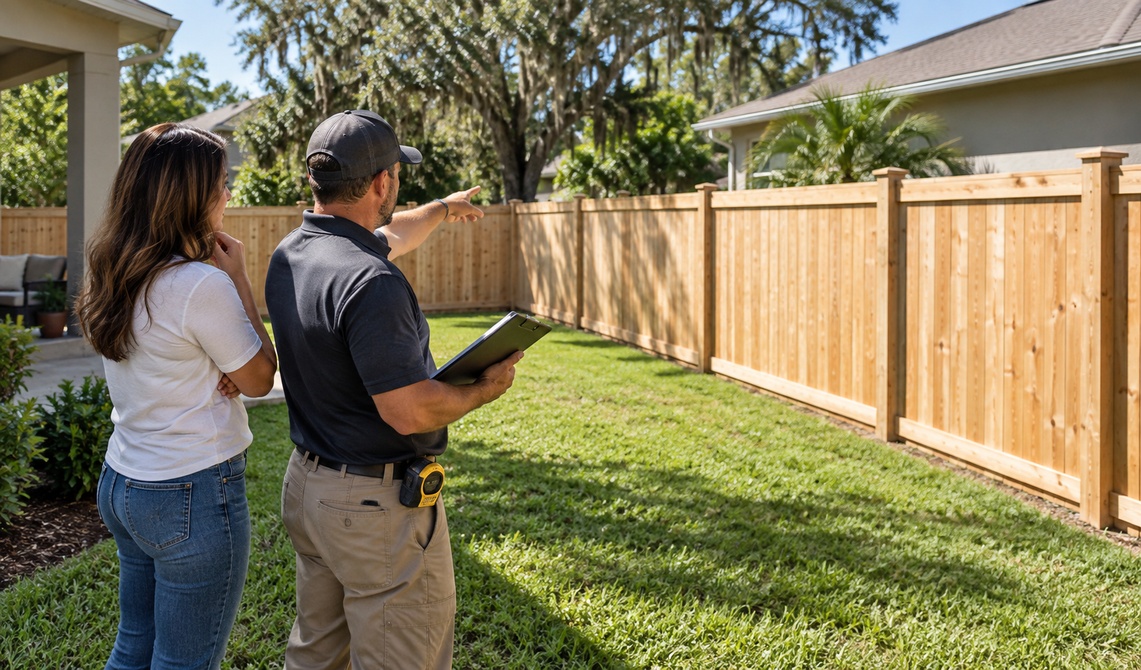
A fence quote that arrives without explanation is not much help when you are trying to set a realistic budget. Byers Fence provides free measured estimates and will walk you through exactly what is driving the number before you commit to anything. Call (386) 457-2045 or request your estimate online and we will come out, measure the property, and give you a clear picture of the cost and why.
Debary homeowners planning a first fence often start with a rough number in mind and discover quickly that quotes range more than expected. Some of that range reflects quality differences. Some of it reflects differences in scope. And some of it reflects contractors who are quoting different jobs even though the request sounded identical. Understanding what actually moves a fence price up or down puts you in a much better position to compare quotes honestly and avoid the ones that will cost you more in the long run.
How Do Material Choice and Linear Footage Move the Total?
Material is the single largest driver of total fence cost, and the gap between options is significant enough to shape the entire budget conversation. Pressure-treated wood is typically the most affordable entry point for a privacy fence in Volusia County, but it requires ongoing maintenance, is susceptible to moisture damage over time in Florida's climate, and will need treatment or replacement sooner than other materials. Vinyl costs more upfront and holds up considerably better over a decade of Florida heat and rain with almost no maintenance required. Aluminum works well for decorative or pool-code applications. Each material has a different cost per linear foot installed, and that per-foot number multiplied across your property line is where the budget is largely determined.
Linear footage is the other major factor, and it surprises homeowners who have not walked their property with a measuring tape. A standard suburban lot in Debary that feels like a modest backyard fence project can easily run two hundred linear feet or more once the side yards are included. Adding a side yard to enclose the full property rather than just the back line can increase the total footage by thirty to fifty percent, which changes the quote proportionally. Being clear with the contractor about exactly what you want enclosed, and understanding the footage before you see the number, prevents sticker shock when the estimate arrives.
Height matters too. A six-foot privacy fence uses more material than a four-foot picket fence, and the post depth and concrete requirements increase with height. Most residential privacy fences in Florida run six feet, which is the standard for backyard enclosure and the height required for most pool barrier applications.
How Do Gates, Grade Changes, and Post Depth Affect the Cost?
Gates are a meaningful add-on cost that often gets underestimated in early budget conversations. A single walk gate is a modest addition. A double drive gate wide enough to move equipment through requires heavier posts, deeper concrete footings, and hardware rated for the additional weight and use. If you are planning a gate for regular vehicle access or for moving a riding mower, that gate needs to be sized and reinforced appropriately, and the cost reflects that. Ask the contractor specifically how gates are priced and what hardware is included, because a gate that is built light to keep the quote down will sag and fail faster than one built to last.
Grade changes along the fence line add labor and sometimes material cost that a flat-yard quote does not capture. Debary properties along the St. Johns River corridor and in some of the older neighborhoods near Highbanks Road can have meaningful elevation changes across a single lot. A fence that follows grade requires the installer to step panels up or down along the run, which takes more time and planning than a straight installation on flat ground. A fence built over grade changes without accounting for them properly will have gaps at the bottom, uneven panel heights, or both.
Post depth is a Florida-specific consideration that affects long-term stability more than most homeowners realize. Sandy soil does not grip a post the way compacted clay does. A post that is not set deep enough and backfilled with adequate concrete will work loose over time, particularly after heavy rain saturates the soil. Standard residential fence posts in Central Florida should be set at a minimum of two feet deep, and taller fences or corner and gate posts should go deeper. A contractor shaving cost by setting posts shallow is creating a fence that will lean before its time.
What Do Permits and Property-Line Surveys Add to the Budget?
Debary requires a building permit for most fence installations, and that permit has a fee that belongs in your budget from the start. The permit process also requires a site plan showing the fence location relative to the property lines, which means you need to know where your property lines actually are before the fence goes in. If you do not have a recent survey and cannot locate your property pins, a survey may be necessary before permitting can proceed.
Property line questions are one of the most common sources of post-installation problems between neighbors. A fence installed based on an assumed property line that turns out to be incorrect creates a dispute that is expensive and unpleasant to resolve. Having a current survey in hand before the fence goes in is not optional caution. It is basic protection against a problem that comes up more often than it should in Volusia County neighborhoods where lots were platted decades ago and pins have been buried or moved.
Ask the contractor whether permit pulling is included in the quote or billed separately. Some contractors handle permitting as a standard part of the job. Others quote the installation and leave permitting to the homeowner. Either arrangement can work, but knowing which one you are getting prevents a surprise administrative task from landing on your plate after you have already signed a contract.
Why Does the Cheapest Quote Often Cost More in the End?
We worked with a Debary homeowner whose fence had finally given out after a lawn-mower accident left it beyond repair. The family knew they did not want to cut corners and find themselves replacing a fence again in a few years. We came out, measured the property, walked them through the material options that made sense for their budget and their situation, and explained what was included in the estimate and why. They chose a fence built to hold up, and the installation reflected that. A fence that lasts fifteen years instead of seven is not twice as expensive to install, but it eliminates one full replacement cycle, which more than covers the difference in upfront cost.
The cheapest quote tends to reflect one or more of the following: shallower post depth, lighter gauge hardware, a thinner material grade, omitted permit costs that will surface later, or a scope that quietly excludes the gate or the side yard run you mentioned in passing. None of those shortcuts show up on the day of installation. They show up when the fence leans after the first hurricane season, when the gate sag makes it impossible to close properly, or when a code inspector notices that no permit was pulled and the fence needs to come down.
A detailed written estimate that specifies material grade, post depth, hardware included, and permit handling is a document you can compare across contractors on equal terms. A quote that is just a number is not a fair comparison to one that spells everything out. Ask for specifics from every contractor you consider, and weight the quotes accordingly.
If you are ready to budget a new fence in Debary and want a clear, honest estimate before you commit, call Byers Fence at (386) 457-2045 or schedule your free measured estimate online. We explain the pricing, answer the questions, and let the fence installation speak for itself.